|
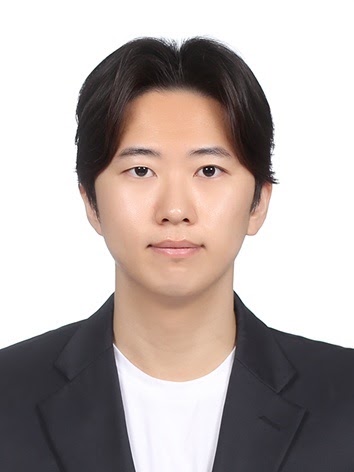
Jinhyuk Jang 장진혁 I am an MS student at the Kim Jaechul Graduate School of AI, KAIST, advised by Seungryong Kim in the Computer Vision Lab. I received my B.S. in Computer Science from KAIST in 2025. From January to June 2027 I will be visiting the University of Toronto. Email / CV / Google Scholar / GitHub |
|
ResearchI work on generative models for video and 3D. My aim is to represent the real world as faithfully as possible — and not only as pixels. A generated world becomes useful once the things inside it have structure: parts, joints, and an interior, so that they can be dropped into a simulator and behave. The difficulty is that a closed object's interior is never observed, so no dataset can supply it; I am working toward drawing that missing structure from the world knowledge held in large language and vision–language models. Before this, I worked on making video diffusion fast enough to run live. |
NewsJan 2027 Visiting the University of Toronto, January–June 2027, through the AI convergence program funded by IITP. Aug 2026 Selected for the 2027 University of Toronto AI convergence program. Aug 2026 Our study on interaction strategies with ChatGPT was accepted to ACM TOSEM. Jun 2026 Lip Forcing released — paper, code, and weights are public. 2026 CAMEO accepted to CVPR 2026. |
Publications* denotes equal contribution. |
|
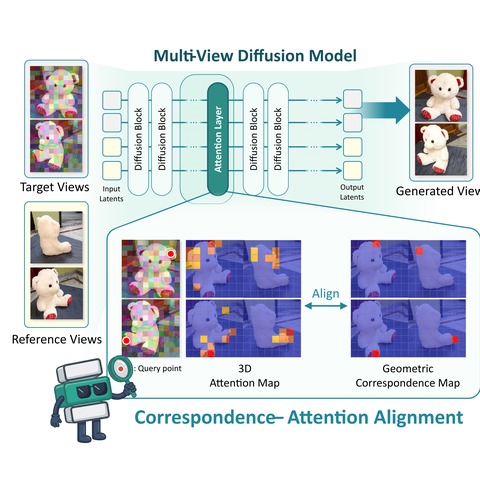
CAMEO: Correspondence-Attention Alignment for Multi-View Diffusion Models
Minkyung Kwon, Jinhyeok Choi, Jiho Park, Seonghu Jeon, Jinhyuk Jang, Junyoung Seo, Minseop Kwak, Jin-Hwa Kim, Seungryong Kim CVPR, 2026 arXiv Multi-view diffusion models pick up geometric correspondence inside their attention maps on their own, but it degrades under large viewpoint change. Supervising a single attention layer with correspondence halves the iterations needed to converge. |
|
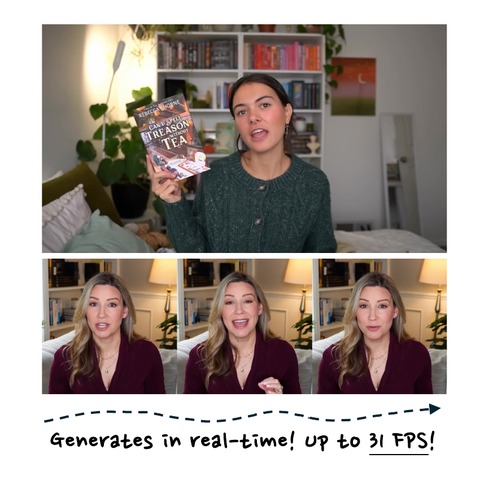
Lip Forcing: Few-Step Autoregressive Diffusion for Real-time Lip Synchronization
Paul Hyunbin Cho*, Jinhyuk Jang*, SeokYoung Lee, Joungbin Lee, Siyoon Jin, Heeseong Shin, Jung Yi, Yunjin Park, Chulmin Park, Seungryong Kim arXiv preprint, 2026 arXiv / project page / code / weights A 14B bidirectional lip-sync teacher distilled into a causal student that denoises each chunk in two steps with no inference-time CFG. The 1.3B student runs at 31 FPS, 17.6× faster than its same-scale bidirectional model. |
|
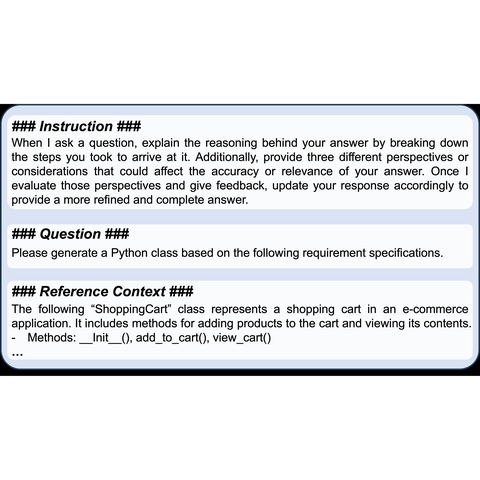
Experimental Analysis of Productive Interaction Strategy with ChatGPT: User Study on Function and Project-level Code Generation Tasks
Sangwon Hyun, Hyunjun Kim, Jinhyuk Jang, Hyojin Choi, M. Ali Babar ACM Transactions on Software Engineering and Methodology (TOSEM), to appear arXiv A user study with 36 participants on how prompting patterns affect productivity in function- and project-level code generation. |
|
Pilot System Design Study for User-Friendly Mobile/Wearable Sensor Data Collection
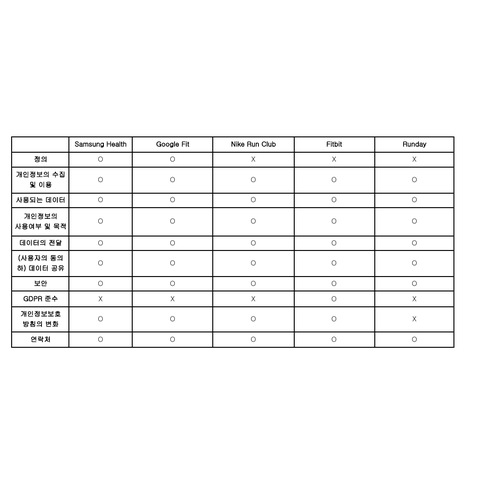
Jinhyuk Jang, Hyunsoo Lee, Uichin Lee Korea Computer Congress (KCC), KIISE, 2022 paper Commercial health-sensing apps disclose what they collect in ways most users cannot act on. We audited five against GDPR requirements and prototyped a privacy notice people could actually read. |
Education
|
Experience
|
|
Last updated September 2026. Template borrowed from Jon Barron. |